Mono Ammonium Phosphate (MAP) is an important phosphorus-based fertilizer and industrial chemical requiring controlled drying to achieve optimal product quality and storage stability. Due to its crystalline structure and thermal sensitivity, MAP presents specific challenges during moisture removal, including the risk of decomposition, caking, and dust formation. This paper describes the application of a TEMA Process fluid bed dryer/cooler for drying MAP granules. Key process principles, equipment design features, operating parameters, and product quality outcomes are discussed. The results demonstrate that fluid bed drying provides uniform moisture removal, gentle solids handling, and precise thermal control, making it a robust and energy-efficient solution for MAP processing.
1. Introduction
Mono Ammonium Phosphate (NH₄H₂PO₄) is widely used in agriculture as a high-analysis phosphorus fertilizer and in industrial applications such as fire retardants and specialty chemicals. MAP is typically produced through the neutralization of phosphoric acid with ammonia, resulting in a wet crystalline or granular product that must be dried and cooled prior to storage and distribution.
Drying MAP presents several technical challenges. The material is heat sensitive and may decompose at elevated temperatures, releasing ammonia. Additionally, excessive mechanical stress can lead to particle degradation and fines generation. As a result, the selection of an appropriate drying technology is critical.
Fluid bed drying is well established for granular and crystalline materials. This paper examines the use of a TEMA Process fluid bed dryer/cooler for MAP drying, focusing on process design, operational performance, and product quality.
2. Characteristics of Mono Ammonium Phosphate Relevant to Drying
Key material properties influencing MAP drying include:
Thermal sensitivity, with decomposition risk at elevated temperatures Moderate hygroscopicity, requiring low residual moisture for storage stability Crystalline structure, susceptible to attrition under high mechanical stress Dust generation potential, especially for fine particle fractions
These characteristics necessitate a drying system capable of uniform heat transfer, precise temperature control, and gentle particle handling.
3. Fluid Bed Drying Technology
In a fluid bed dryer, solid particles are suspended by an upward flow of gas, creating a fluid-like behavior. This condition results in:
High surface area contact between gas and solids Excellent heat and mass transfer coefficients Uniform temperature distribution within the bed
For MAP, these features allow rapid moisture removal at relatively low operating temperatures, minimizing the risk of product degradation.
4. TEMA Process Fluid Bed Dryer/Cooler Design
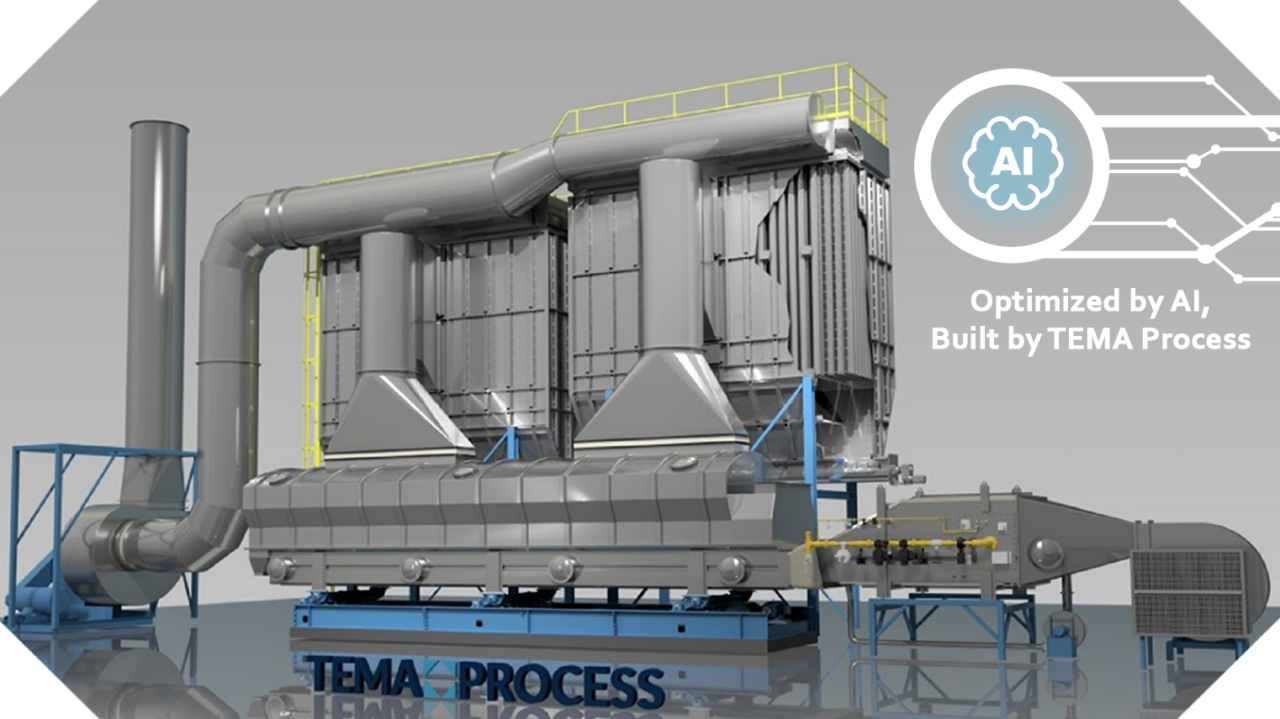
The TEMA Process fluid bed dryer/cooler is designed to meet the specific requirements of fertilizer and chemical processing applications. Key components include:
A perforated distributor plate ensuring uniform air distribution Controlled hot air inlet with accurate temperature regulation Multiple drying zones to optimize moisture removal An integrated cooling section for controlled product temperature reduction Dust collection and exhaust air handling systems Automated process control and safety interlocks
The equipment may be configured for continuous operation to suit industrial MAP production rates.
5. Process Description
5.1 Feed Preparation
MAP slurry is typically dewatered using filtration or centrifugation prior to drying. The resulting wet solids are fed evenly into the fluid bed dryer to ensure stable fluidization.
5.2 Drying Stage
Heated air is introduced from below the distributor plate, fluidizing the MAP particles. Moisture evaporates rapidly from the particle surfaces due to intense gas–solid contact.
Typical operating conditions include:
Inlet air temperature: 80–120 °C Controlled superficial air velocity to maintain stable fluidization Bed temperatures maintained below decomposition limits
5.3 Cooling Stage
After achieving the target moisture content, the dried MAP granules pass into a cooling zone within the same unit. Cooling air reduces the product temperature prior to discharge, improving handling and preventing caking during storage.
6. Operating Considerations
6.1 Temperature Control
Precise control of bed temperature is critical to avoid MAP decomposition and ammonia release. The fluid bed configuration ensures uniform heat distribution and avoids localized overheating.
6.2 Air Distribution and Fluidization
Uniform airflow across the distributor plate is essential to prevent channeling and dead zones, which can lead to uneven drying and product quality variations.
6.3 Dust Management
Dust generated during fluidization is captured using cyclones and bag filters. Proper dust control improves yield and ensures compliance with environmental regulations.
6.4 Energy Efficiency
Heat recovery from exhaust air can be integrated into the system to preheat incoming air, reducing overall energy consumption and operating costs.
7. Product Quality and Performance
Operation of a TEMA Process fluid bed dryer/cooler for MAP typically results in:
Final moisture content of ≤ 0.5–1.0 wt % Uniform, free-flowing granules Minimal fines generation Improved storage and transport stability
These outcomes demonstrate the suitability of fluid bed drying for MAP production.
8. Safety and Environmental Considerations
Safety measures include temperature and pressure monitoring, explosion protection where required, and controlled exhaust air handling. Monitoring of ammonia emissions may also be implemented to meet environmental standards.
9. Conclusions
The drying of Mono Ammonium Phosphate using a TEMA Process fluid bed dryer/cooler provides an efficient, controllable, and product-friendly solution. The technology offers uniform drying, integrated cooling, and gentle solids handling while minimizing thermal stress and dust generation. These advantages make fluid bed drying a preferred option for industrial MAP production.
#Fertilizer #MAP #MonoAmmoniumPhosphate
#DryingTechnology #FluidBedDryer
#ChemicalEngineering #ProcessEngineering
#TEMAProcess #IndustrialDrying