
Belt dryers & coolers

How does a belt dryer work?

A continuous conveyor belt dryer system is a particularly gentle thermal treatment for your product. It can dry large quantities with high moisture loads, temperature sensitive or brittle products and products which require a long residence time. The dryer is divided into segments (drying zones) in order to create high air velocities with a lower air volume. Fans and heaters can be placed inline or outside the tunnel and  will heat up the saturated and cooled air again. This allows the use of low temperature heating media and a smaller total airflow which is repeatedly heated up. The wet solids are continuously and evenly divided onto a perforated conveyor belt, this can be a single or multiple belt system. Air passes the product layer in a downstream or upstream flow (or both) in order to dry products with maximum uniformity. By controlling the airflow, temperature and humidity during the drying process the product output capacity will be maximized and the energy consumption will be minimized.
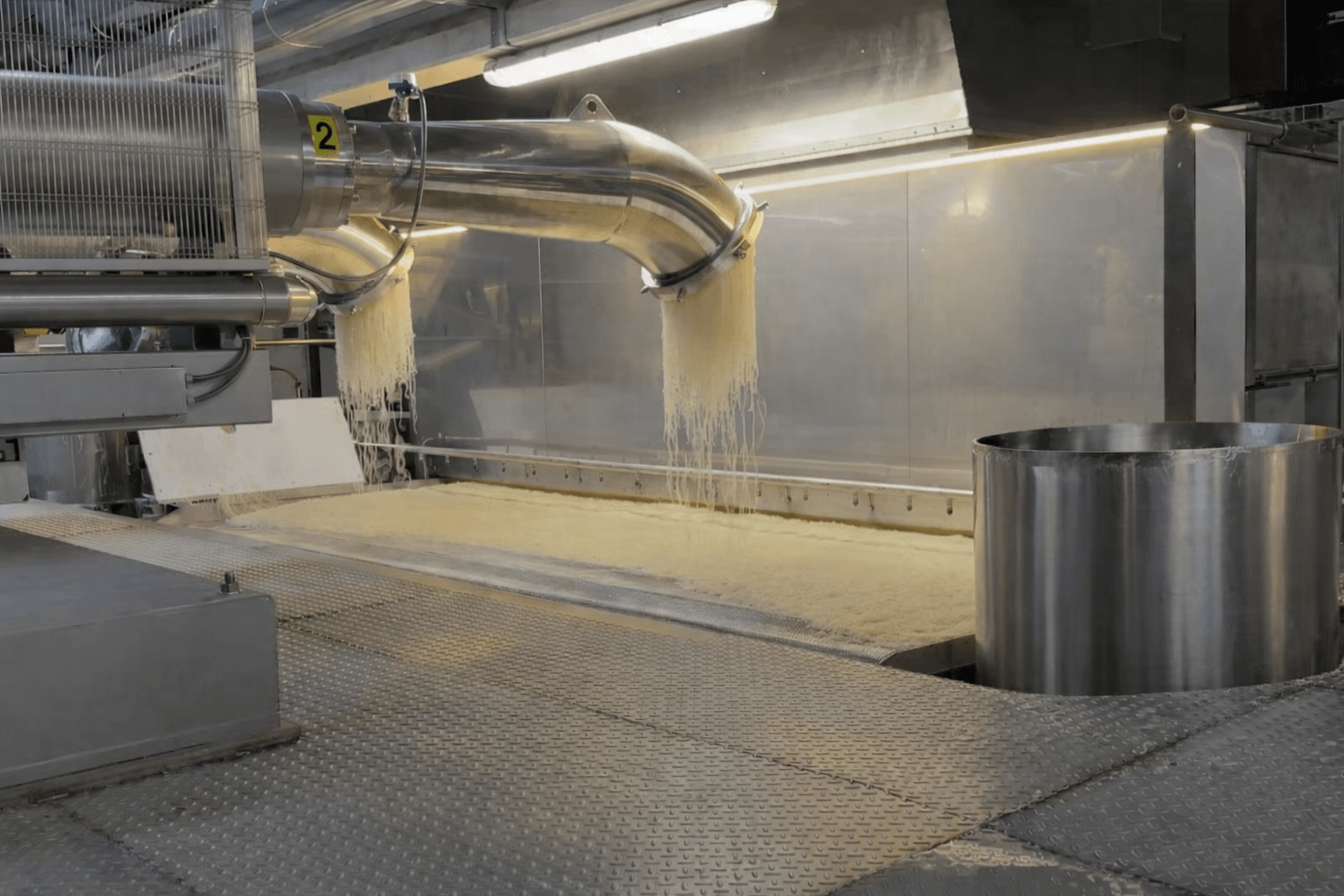
Belt dryer and air dehumidifying solutions for the gelatin industry

How does a belt and air drying solution for Gelatin industry work?

TEMA Process belt dryers combine a hygienic liquid-desiccant air dehumidifier with a multi-zone, temperature-controlled conveyor to dry gelatin noodles quickly, safely and economically. Ambient air is washed with a hygroscopic salt solution that removes moisture and destroys up to 99 % of airborne bacteria, then directed through successive compartments where temperature is gently ramped to prevent melting. Integrated heat recovery lowers energy use up to 40 %, while custom low-shear fans eliminate hot spots and guarantee uniform moisture removal. A final cooling section and inline mill deliver free-flowing powder ready for downstream processing. The result is consistent bloom value, long shelf life and the lowest cost-per-kilogram gelatin on the market. Trusted worldwide, the Dutch-built system meets strict food and pharma standards today.

TEMA Process belt dryer and air-drying solution is the core technology that enables gelatin and other sensitive products to be dried fast, evenly and economically. A continuous stainless-steel conveyor carries the product through multiple temperature-controlled compartments while a powerful air dehumidification system constantly supplies clean, conditioned air. By combining a moving belt, cross-flow ventilation and precise process automation, the installation delivers uniform moisture removal, short residence time and high throughput—key performance indicators for gelatin producers seeking consistent product quality, reduced operating costs and a compact footprint.

Edible and pharmaceutical-grade gelatin is ubiquitous in food, nutraceutical, pharmaceutical and cosmetic formulations, but its functional properties—gelling strength, clarity, viscosity—depend on reaching an exact residual moisture. Because gelatin melts near body temperature, it demands tight control of temperature (±1 °C) and relative humidity during drying. Inadequate drying leads to stickiness, microbial growth or loss of bloom value, while over-drying wastes energy and reduces yield. TEMA Process integrates PLC-driven sensors, dew-point monitoring and fully modulating valves so operators can hit the moisture window every batch.

High-grade gelatin is microbiologically sensitive: airborne bacteria, molds and yeasts can compromise shelf life and regulatory compliance. Therefore the dryer must deliver decontaminated, low-dew-point air at precisely staged temperatures—from about 15 °C in the inlet zone up to 55–65 °C in the final zones—without exceeding gelatin’s melting point. TEMA’s closed-loop design maintains positive pressure, preventing unfiltered plant air from infiltrating the process, while stainless-steel construction and hygienic design allow thorough wash-down.

A proprietary hygroscopic salt-solution (liquid desiccant) air washer sits at the heart of the system. Ambient air passes counter-flow through a mist of concentrated salt solution that removes moisture and kills up to 99 % of airborne bacteria, delivering ultra-dry, sanitized air to the dryer. Unlike conventional chillers or desiccant wheels, the salt solution is continuously regenerated, resulting in steady dew-point control down to 4 g H₂O/kg dry air with minimal maintenance.

After enzymatic extraction, the gelatin mass is chilled and extruded into spaghetti-like strands that present a high surface-area structure ideal for dehydration. The endless belt receives these strands and conveys them into the first compartment, where the dehumidified air flows through the product bed, initiating rapid surface drying that locks shape and prevents clumping. Variable-speed drives let operators fine-tune belt residence time for different grades or viscosities.

Water absorbed by the salt solution is stripped in a regenerator where low-grade heat evaporates the moisture into an exhaust airstream. A plate heat exchanger transfers sensible heat from the hot, wet exhaust to the cooler, incoming solution, cutting steam or thermal-oil demand by up to 40 %. This closed energy loop means lower carbon footprint and rapid payback compared with conventional dehumidifiers.

As the gelatin travels through successive zones, TEMA Process software increments air temperature in small steps to drive moisture diffusion without exceeding the critical glass-transition temperature that would cause melting or agglomeration. Custom low-shear, high-volume fans eliminate hot spots and balance airflow across the full belt width, safeguarding product integrity and maximizing uptime.

In the final section, a cooling zone lowers product temperature to below 25 °C, fixing the moisture profile and easing handling. The dried noodles enter an inline mill or crusher that converts them into a uniform granular or powder form ready for blending, packaging or further refinement. Enclosed transfer systems protect against re-humidification and dust emissions, meeting ATEX and OSHA dust-control standards.

With its integrated belt dryer and liquid-desiccant air dehumidifier, TEMA Process delivers technical, operational and economic advantages: shorter drying cycles, energy savings up to 50 %, microbiological safety, compact footprint and reduced maintenance. These benefits translate into lower cost-per-kg gelatin, higher yield and reliable compliance with food and pharma regulations—making the installation one of the most efficient solutions on the global market.

Advantages of a belt dryer

  • Multiple drying zones with adjustable air volumes, temperature and humidity control will result into the highest thermal efficiency and gentle drying conditions

  • Hygienic design, fully stainless steel execution, dryer can be cleaned easily

  • Maximized product output with minimized energy consumption

  • Heating can be realized using hot water, heat pump systems, steam, direct or indirect natural gas heaters and thermal oil

  • Custom-made solutions: the product drying behavior, belt type, air control system and available heating media are input data for the best solution

  • After drying product can be cooled down inline

  • Preassembled parts in workshop assures easy and minimized field installation time

Interested?

Exploring options for your process? TEMA Process is here to assist. Whether you have specific questions or need guidance in selecting the right solution, our experts are just a call or email away. Leave your contact details, and one of our specialized team members will promptly get in touch. They’ll provide you with all the necessary information about our advanced solutions, tailored to meet your unique requirements. Let TEMA Process be your partner in achieving optimal product quality and safety