In meat processing, climate control is usually discussed in terms of product quality, food safety, and hygiene. And for good reason — these are all essential. But there is another important factor that deserves just as much attention: the people working in the facility every day.
When the indoor climate is unstable, employees feel the impact immediately. Foggy air, condensation, cold drafts, wet floors, and fluctuating room conditions can make the workplace uncomfortable and difficult to manage. Over time, this affects not only comfort, but also safety, productivity, and overall operational performance.
A well-designed ventilation and dehumidification system helps create a stable indoor climate — one that supports both the production process and the people behind it.
The indoor climate challenge in meat processing
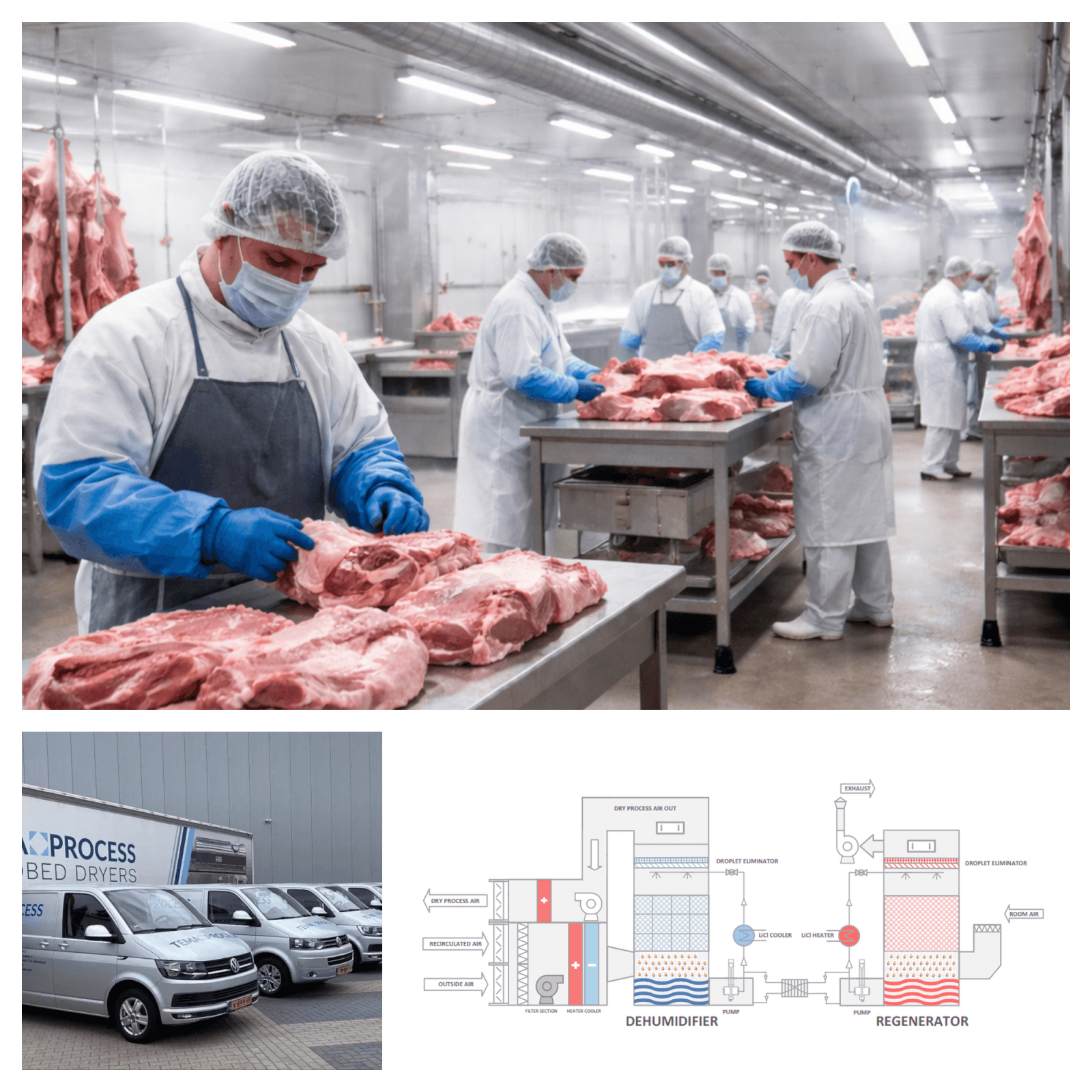
Meat processing environments are demanding by nature. Production areas often have to deal with chilled products, low room temperatures, intensive cleaning procedures, constant movement of people and goods, and changing outdoor weather conditions.
Together, these factors can make it difficult to maintain a stable indoor climate. Even when temperature is carefully controlled, humidity levels can still rise and lead to issues such as:
• Condensation on cold surfaces and products
• Fog formation in production areas
• Water dripping from ceilings or pipework
• Slippery floors
• Cold and damp working conditions
For employees on the production floor, these are not minor inconveniences. They directly influence how safe, comfortable, and manageable the working environment feels throughout the day.
Why employee comfort matters
In industrial environments, employee comfort is sometimes seen as secondary to technical performance. In reality, the two are closely connected.
When people work in a space that feels too humid, too cold, or visually unclear because of fog, the job becomes more physically demanding. Moisture in the air can make cold areas feel even more uncomfortable. Wet surfaces and condensation add to the strain, especially during long shifts.
A stable indoor climate helps create conditions in which people can work more effectively. Better visibility, drier air, and less moisture build-up all contribute to a production environment that is easier to manage and more predictable on a day-to-day basis.
Safety starts with the right environment
Moisture-related issues do not just affect comfort — they also have a direct impact on safety.
Wet floors increase the risk of slipping. Condensation on overhead surfaces can cause unwanted dripping. Fog can reduce visibility in certain areas. Moisture around equipment may also create additional operational risks.
By keeping the dew point under control, many of these moisture-related issues can be significantly reduced. That means fewer wet surfaces, less fog, and a more stable indoor climate throughout the production area.
For the people on the work floor, that makes a real difference. A safe workplace depends not only on procedures and personal protective equipment, but also on the right environmental conditions.
A stable climate supports daily operations
Production teams perform best when room conditions remain stable. Large fluctuations in humidity and airflow make processing areas harder to work in and more difficult to control.
A properly designed ventilation and dehumidification system helps maintain stable air conditions, even when the facility is dealing with:
• Cleaning cycles
• Fluctuating production loads
• Outdoor weather influences
• Products entering the room at different temperatures
This stability improves the overall work environment. Instead of constantly reacting to fog, dripping, or sudden moisture peaks, production teams can stay focused on the process itself.
Better conditions for people, better conditions for production
There is a clear link between a stable working climate and strong operational performance. When people work in a cleaner, drier, and more comfortable environment, the entire facility benefits.
Key advantages include:
• Improved comfort for operators and production staff
• Reduced risk of slipping and moisture-related disruptions
• Better visibility in production areas
• Less condensation-related stress on equipment and surfaces
• More stable day-to-day process conditions
In other words, climate control is not only a technical investment. It is also an investment in the people who keep production running.
How TEMA Process helps
TEMA Process designs ventilation and dehumidification systems specifically for demanding environments in the food and meat processing industry. The goal is not simply to remove moisture from the air, but to create a stable and controlled indoor climate in which both production and people can perform at their best.
By controlling humidity, airflow, and temperature — and especially by managing the dew point — TEMA Process helps prevent condensation, reduce moisture-related problems, and improve the indoor climate throughout the facility.
The result is a production environment that is safer, more comfortable, and more consistent.
Looking beyond product protection
In meat processing, indoor climate control is often approached primarily from the perspective of product protection. That is understandable. But when the focus stays only on the product, part of the bigger picture is missed.
A stable indoor climate also supports the people on the production floor. It helps reduce discomfort, improve safety, and create a more efficient and manageable operation.
And in an environment where people and process are closely connected, that makes a difference every single day.
Contact a specialist
If humidity, condensation, fog formation, or unstable room conditions are affecting comfort and safety in your meat processing facility, TEMA Process can help you identify the right solution for your layout and operating conditions.
Feel free to contact one of our specialists for a no-obligation consultation.