Did you know that drying sand—one of the most common industrial processes—can be made far more energy-efficient and sustainable?
Today, we explore a cutting-edge hybrid drying system combining fluid bed technology with renewable energy. Hybrid sand drying systems are transforming the way industries handle moisture removal in materials like construction sand, foundry sand, and minerals.
By combining advanced fluid bed drying technology with renewable energy and smart heat management, it is possible to significantly improve efficiency while reducing environmental impact.
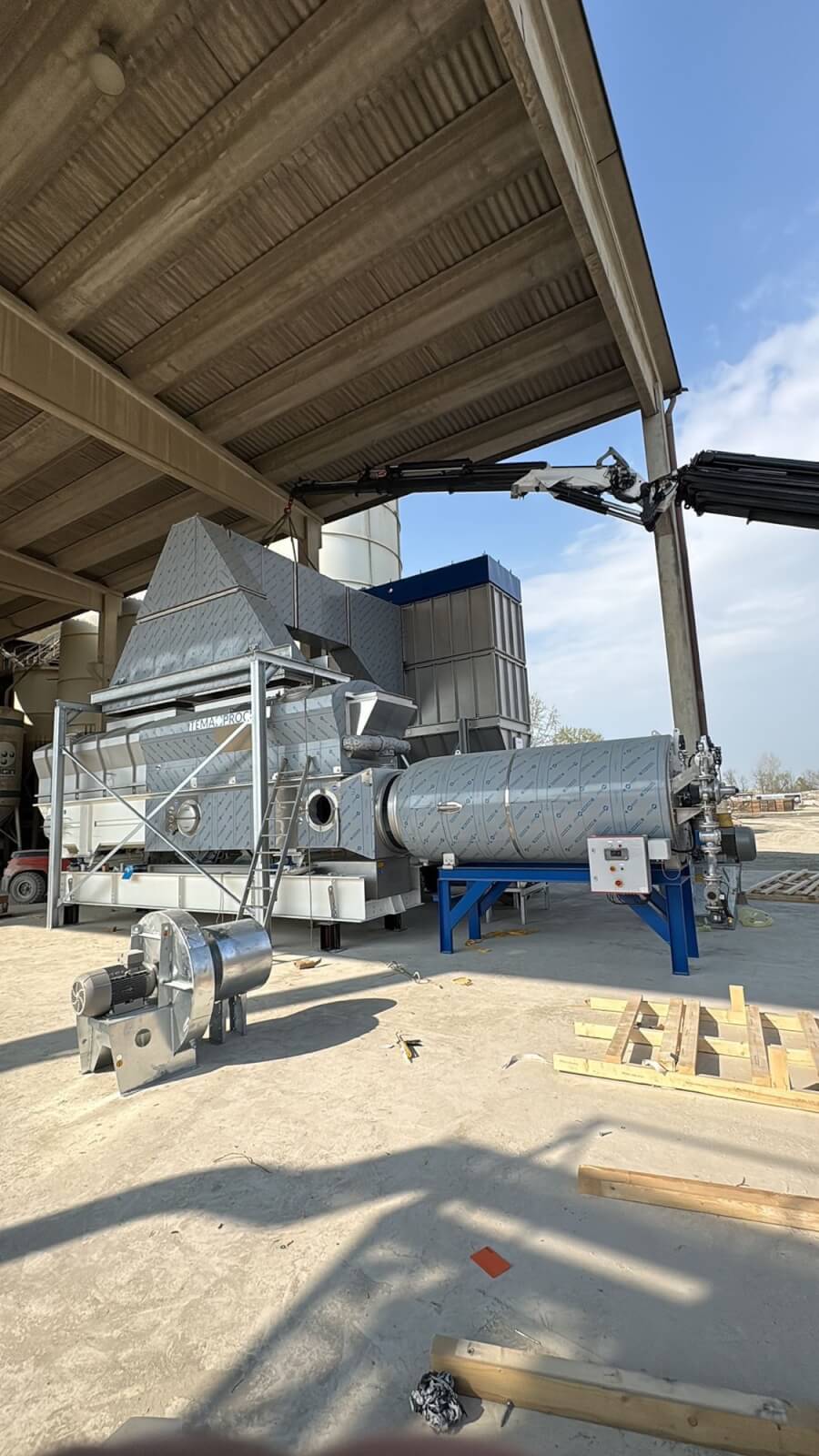
At the core of this system is a TEMA Process fluid bed dryer. In this type of dryer, sand particles are suspended in an upward flow of heated air, creating a fluid-like state. This ensures uniform drying, fast heat transfer, and consistent product quality.
Compared to traditional rotary dryers, fluid bed systems offer better control and higher efficiency. What makes this setup particularly innovative is the hybrid energy concept. Instead of relying solely on fossil fuels, the system integrates multiple energy sources. A heat pump plays a key role by recovering heat from the exhaust air and reusing it to preheat incoming air. This reduces overall energy demand and improves system efficiency. The main heating of the air is done by means of an electrical air heater. This heater provides precise temperature control, which is essential for stable drying conditions.
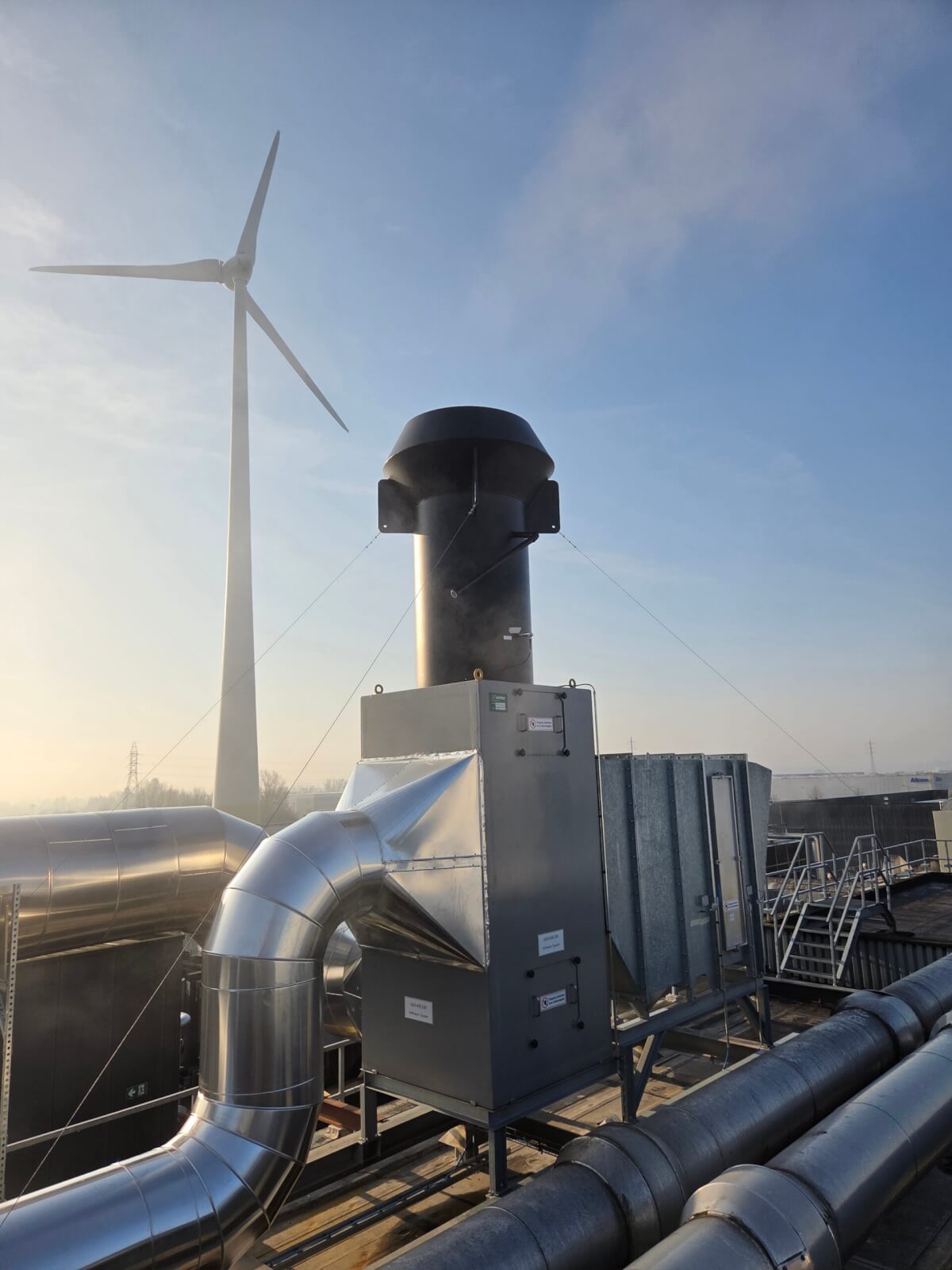
The electricity required for both the heater and the heat pump is primarily generated from renewable sources such as solar panels and wind turbines. Solar energy supplies power during the day, while wind energy helps balance supply when sunlight is limited. To ensure continuous operation, a gas burner is installed as a backup system. When renewable energy is insufficient, the burner automatically provides the necessary heat, maintaining process stability and avoiding production downtime.
In operation, wet sand enters the fluid bed dryer, where it is exposed to preheated air. The air is first warmed using recovered heat via the heat pump, then brought to the required temperature by the electrical heater. The sand is fluidized and dried efficiently, while exhaust air is reused wherever possible. This hybrid approach offers several key benefits. It reduces energy consumption, lowers CO₂ emissions, and decreases operational costs. At the same time, it ensures reliability through the backup gas system. As industries move toward more sustainable solutions, hybrid drying systems like this represent a practical and future-proof direction.
Global Situations causes increases prices and delivery instability. EU mandates 15% gas consumption cut and CO2 reduction of 55% in 2030. Global warming effects and rising CO2 prices demand reduction.
At Tema Process we strive every day to build the most efficient thermal treatment solutions, which can make a global impact. Through knowledge, collaboration and implementing the latest technologies, we want to make our industries more sustainable.